In recent years, the rise of social media has driven countless people to chase dramatic photos and videos in the wild. The desire for the perfect selfie has pushed many travelers, hikers, and adventure enthusiasts dangerously close to wildlife—often with devastating consequences. One such tragic incident unfolded deep inside a remote jungle, where a woman’s attempt to take a selfie with a lion ended in a terrifying and nearly fatal attack.
The woman, identified by local reports as a 32-year-old tourist, had been exploring the jungle with a small group of travelers and a guide. The area was known for its rich biodiversity and rare wildlife sightings. Although the group had been warned about maintaining distance from animals—especially predators—excitement and overconfidence overshadowed caution.
According to eyewitnesses, the group had stopped near a shaded clearing where a lone lion was resting. The guide advised everyone to stay behind a marked boundary and observe quietly from a distance. However, the woman, who was reportedly passionate about capturing unique travel photos, stepped past the safety line. She walked closer to the lion, phone in hand, hoping to snap a dramatic selfie with the powerful predator behind her.
At first, the lion seemed uninterested, lying silently with its head resting on its paws. This false sense of calm encouraged the woman even more. She turned her back to the animal, lifted her phone, and tried to angle herself for the perfect shot. The clicking sounds and her movements finally caught the lion’s attention. Within seconds, the situation shifted from a photo opportunity to a life-threatening emergency.
The lion rose to its feet, ears alert, eyes focused on the sudden intrusion. Before anyone could react, the animal lunged forward, closing the distance in a single explosive leap. The woman barely had time to scream before the lion swiped at her with its powerful paw, knocking her to the ground. The attack was fast, violent, and shocking for everyone present.
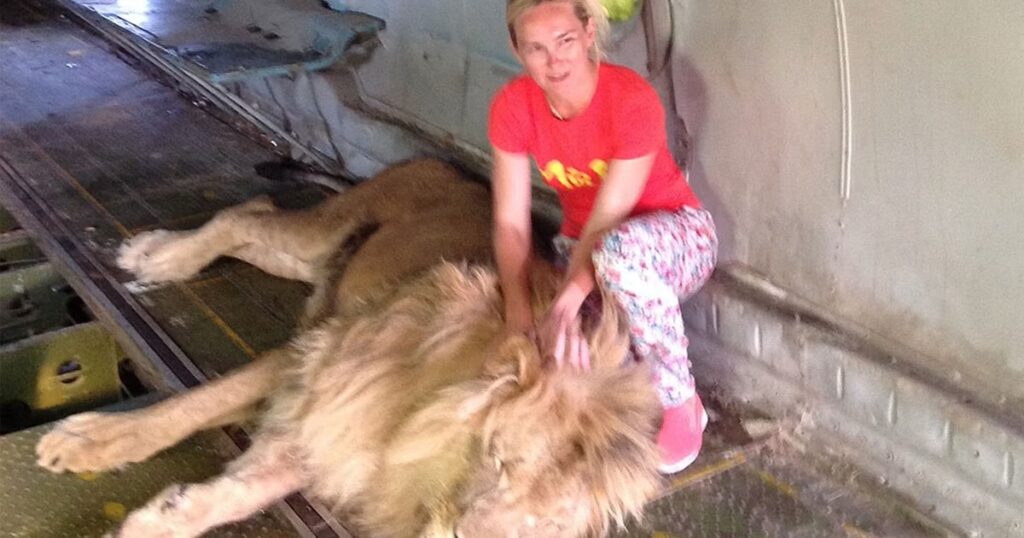
Screams echoed through the clearing as the guide rushed forward, shouting and making loud noises in a desperate attempt to distract the lion. The other travelers backed away, terrified and unsure how to help. The lion, however, was unbothered by the noise and continued to claw and bite at the woman, who struggled helplessly beneath its weight.
In a stroke of quick thinking, the guide grabbed a flare from his emergency kit and ignited it. The sudden burst of bright light and smoke startled the lion enough to break its focus. After a tense moment, the animal retreated a few steps, growling but eventually turning away and disappearing into the dense trees. The attack lasted less than a minute, but the damage was catastrophic.
The woman sustained severe injuries—deep claw marks, puncture wounds, and heavy bleeding. The guide and two travelers carried her to a safer area and immediately called for emergency evacuation. A rescue team arrived after a long and challenging journey through the jungle terrain. She was airlifted to a nearby hospital, where doctors worked urgently to stabilize her. Although she survived, her injuries required extensive treatment, surgeries, and rehabilitation.
Authorities investigating the incident emphasized that the lion had acted purely on instinct. The animal was neither aggressive nor known to attack humans before. Experts explained that wildlife reacts defensively when they feel threatened or when humans invade their space, especially at close range. In this case, the lion perceived the woman’s approaching movements, noises, and sudden proximity as a possible threat.
Wildlife conservationists, local officials, and tour operators all expressed frustration over the growing trend of dangerous behavior caused by social media pressures. Many travelers ignore warnings and take unnecessary risks for the sake of capturing a viral photo or dramatic video. This incident, they said, highlights the urgent need for stricter safety rules and greater awareness.
Moreover, the event raised questions about tourist guidelines and enforcement. While the guide had clearly instructed the group to maintain a safe distance, the temptation of a perfect selfie led to a tragic outcome. Some conservation groups argue that tourists should undergo mandatory orientation before entering wildlife zones, while others call for increased penalties for those who violate safety rules.
The woman’s family later released a statement expressing gratitude to the guide and rescue team for saving her life. They also urged others not to repeat her mistake. “No picture is worth risking your life,” the family said. “We hope people learn from this and respect the wildlife and the rules meant to protect both humans and animals.”

As for the lion, local authorities determined that the animal would not be harmed or relocated. The attack was deemed a defensive response, and the lion remained within its natural habitat. Conservationists stressed that wildlife should never be blamed for reacting naturally to human interference.
This incident serves as a sobering reminder that nature is powerful, unpredictable, and deserving of respect. Wilderness areas are not amusement parks, and wild animals are not props for social media content. When visitors ignore boundaries and cross into restricted zones, they not only endanger themselves but also risk provoking animals into harmful encounters that can have consequences for both sides.
Ultimately, the jungle attack underscores the importance of valuing safety over social media fame. The pursuit of the perfect selfie can turn deadly in an instant. Whether exploring jungles, mountains, or wildlife preserves, responsible behavior, respect for nature, and adherence to guidelines are essential. The woman survived her ordeal, but her story now stands as a powerful cautionary tale for travelers around the world.