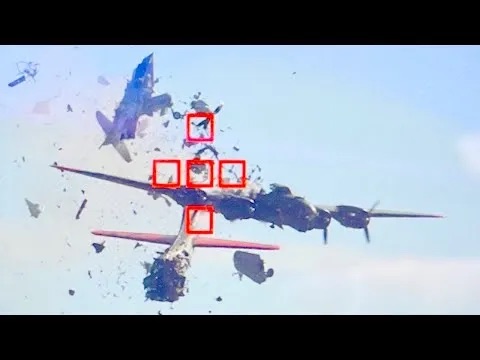
Wings of History Collide: The Fatal Encounter Between a P-63 Kingcobra and a B-17 Flying Fortress A Deadly Crossing in the Sky: Remembering the P-63 and B-17 Mid-Air Tragedy
A tragic mid-air collision between a P-63 Kingcobra fighter and a B-17 Flying Fortress bomber stands as one of the most sobering reminders of the risks faced by aviators, even outside of active combat. Both aircraft are iconic symbols of World War II aviation, celebrated for their roles in shaping air warfare. Yet on that fateful day, history’s most famous machines became part of a devastating accident that claimed lives and shocked the aviation community.
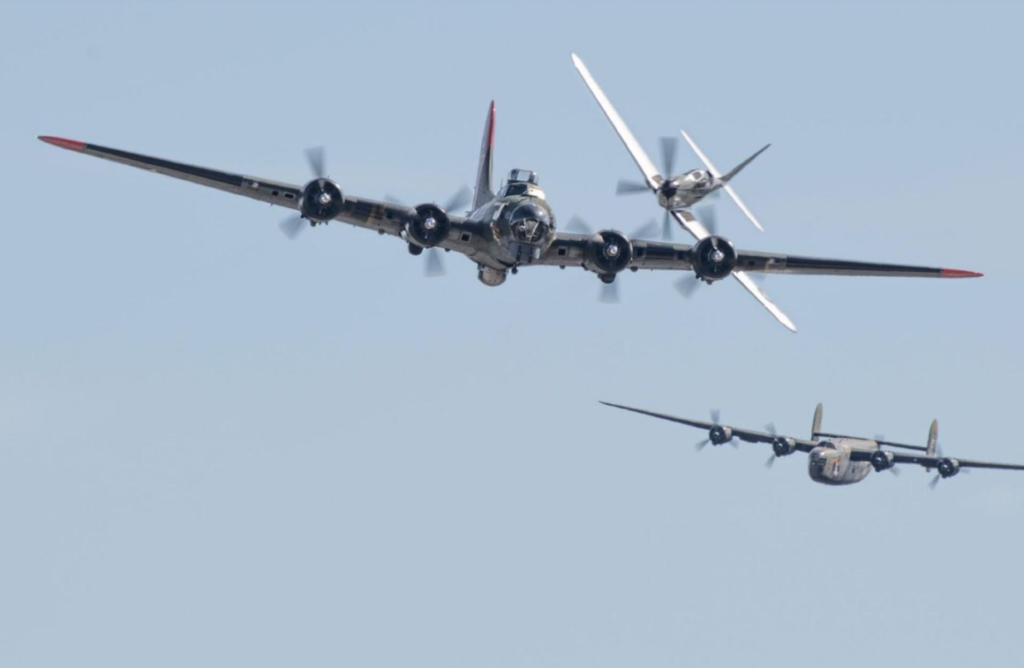
The Bell P-63 Kingcobra was a single-engine fighter developed as an evolution of the earlier P-39 Airacobra. Known for its mid-engine design and heavy nose-mounted armament, the P-63 was fast, agile, and powerful. Although it saw limited combat service with U.S. forces, it was widely used for training and later became popular in airshows and heritage flights. In contrast, the Boeing B-17 Flying Fortress was a four-engine heavy bomber designed to fly long missions deep into enemy territory. With its rugged construction, defensive gun positions, and ability to absorb severe damage, the B-17 earned legendary status during the war.
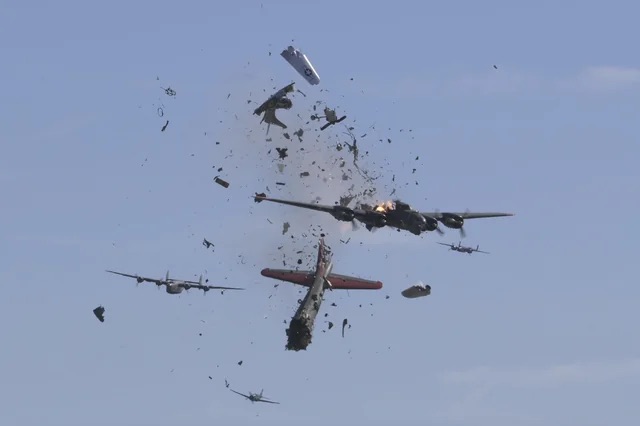
The collision occurred during a coordinated flight that involved multiple vintage aircraft sharing the same airspace. Such flights require precise planning, strict altitude separation, and constant visual awareness. Despite these precautions, the P-63 and the B-17 converged at a critical moment. Within seconds, the fighter struck the bomber, resulting in a catastrophic impact that left no opportunity for recovery.

Eyewitnesses described a sudden flash and debris scattering across the sky. The B-17, massive yet vulnerable at close range, suffered structural failure almost immediately. The P-63, built for speed rather than collision tolerance, disintegrated upon impact. Both aircraft were lost, and all crew members on board were killed, marking a heartbreaking outcome for families, fellow pilots, and aviation enthusiasts around the world.

Investigations into mid-air collisions often focus on visibility limitations, aircraft blind spots, communication breakdowns, and human factors. Vintage aircraft, while meticulously maintained, lack many of the modern safety technologies found in contemporary aviation, such as traffic collision avoidance systems. Pilots rely heavily on visual separation, which can be especially challenging when aircraft of vastly different sizes and speeds share the same airspace.
The loss was felt deeply within the historic aviation community. These aircraft are more than machines; they are living links to the past. Each flight is both a tribute to the men and women who served during wartime and a reminder of the sacrifices made to preserve history. When such aircraft are lost, it is not only the human cost that is mourned, but also the irreplaceable heritage they represent.
In the aftermath, calls for enhanced safety measures grew louder. Organizers of heritage flights and airshows began re-examining formation procedures, airspace management, and pilot coordination. The tragedy served as a painful lesson that even experienced pilots flying well-maintained aircraft are not immune to the dangers of aviation.
The mid-air collision between the P-63 Kingcobra and the B-17 Flying Fortress remains a solemn chapter in aviation history. It underscores the thin line between honor and hazard when preserving and showcasing historic aircraft. While the skies claimed two legends that day, their stories continue to inspire respect for aviation, remembrance for those lost, and a renewed commitment to safety in honoring the past.