Rising proudly along the waterfront of Mobile Bay, the USS Alabama (BB-60) stands today as one of the most iconic and well-preserved battleships from the Golden Age of American naval power. Commissioned during the height of World War II, the ship represents not only a formidable engineering achievement but also a living testament to the courage and resilience of the American sailors who served aboard her. For millions of visitors each year, the Alabama is more than just a museum ship—it is a powerful symbol of history, sacrifice, national pride, and the spirit of innovation that defined the U.S. Navy throughout the twentieth century.
Construction of the USS Alabama began in 1940 at the Norfolk Navy Yard in Virginia as part of the South Dakota-class of fast battleships. Designed for greater speed, improved armor distribution, and heavier firepower, these vessels were intended to serve as both capital ships and protective escorts for fast carrier groups. Measuring 680 feet in length and displacing more than 44,500 tons at full load, the Alabama embodied raw naval strength. Her main battery consisted of nine 16-inch guns capable of firing a 2,700-pound shell over 20 miles, while her secondary armament and anti-aircraft weapons made her a formidable defensive platform.
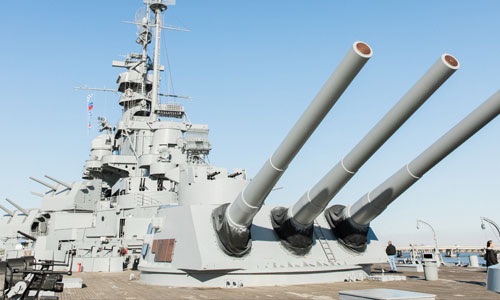
The ship was commissioned on August 16, 1942, and quickly moved into active duty during one of the most complex conflicts in modern history. After initial operations in the Atlantic, where she helped guard convoys and protect Allied shipping lanes from German raiders, the Alabama was reassigned to the Pacific Theater. This move brought her into the heart of some of the most intense naval battles of World War II. It was in these waters—near the Gilbert Islands, the Marshall Islands, the Philippine Sea, and later Okinawa—where the ship truly earned her reputation.
During the Pacific campaigns, the USS Alabama served as a shield for American aircraft carriers, providing anti-aircraft fire during massive aerial assaults launched by Japanese forces. Her gunners often found themselves firing relentlessly at waves of enemy aircraft, including high-speed dive bombers and kamikazes. The ship’s crew worked with astonishing discipline, maintaining round-the-clock vigilance to protect their fleet. Thanks to their efforts, the Alabama never lost a single sailor to enemy action—a remarkable record given the brutal nature of the Pacific war.
One of the most notable engagements involving the Alabama took place during the Battle of the Philippine Sea in June 1944, commonly known as the “Great Marianas Turkey Shoot.” In this extraordinary air-sea conflict, U.S. carrier pilots decimated Japanese air power, and the Alabama played a critical defensive role, shooting down multiple attacking aircraft while sustaining minimal damage. The ship also supported amphibious landings by bombarding enemy positions, demonstrating her versatility as both a defensive and offensive warship.
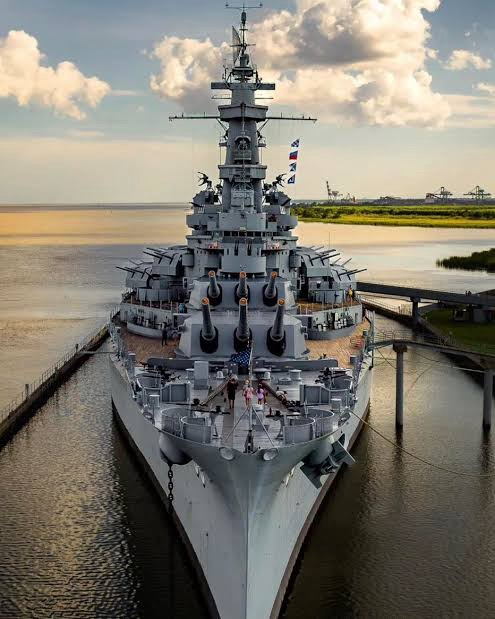
Life aboard the battleship during wartime was demanding and often exhausting. Sailors slept in cramped bunks, endured tropical heat, and operated heavy machinery while constantly prepared for battle. Yet despite the harsh conditions, a deep sense of camaraderie developed among the crew. Stories later shared by veterans reveal a mix of humor, hardship, fear, and pride—moments that shaped young men into lifelong brothers. This human element is what makes the USS Alabama more than just a steel fortress; it is a vessel filled with memories and lived experiences.
When the war ended in 1945, the role of battleships in modern naval warfare began to decline due to the rise of aircraft carriers and missile-equipped destroyers. The Alabama was decommissioned in 1947 and placed in reserve. For many ships of her era, this would have marked the beginning of a slow journey toward the scrapyard. But citizens of Alabama refused to let their namesake ship be forgotten. Through an ambitious fundraising campaign—one of the first large-scale preservation efforts of its kind—they secured the battleship’s future and transformed her into a permanent memorial.
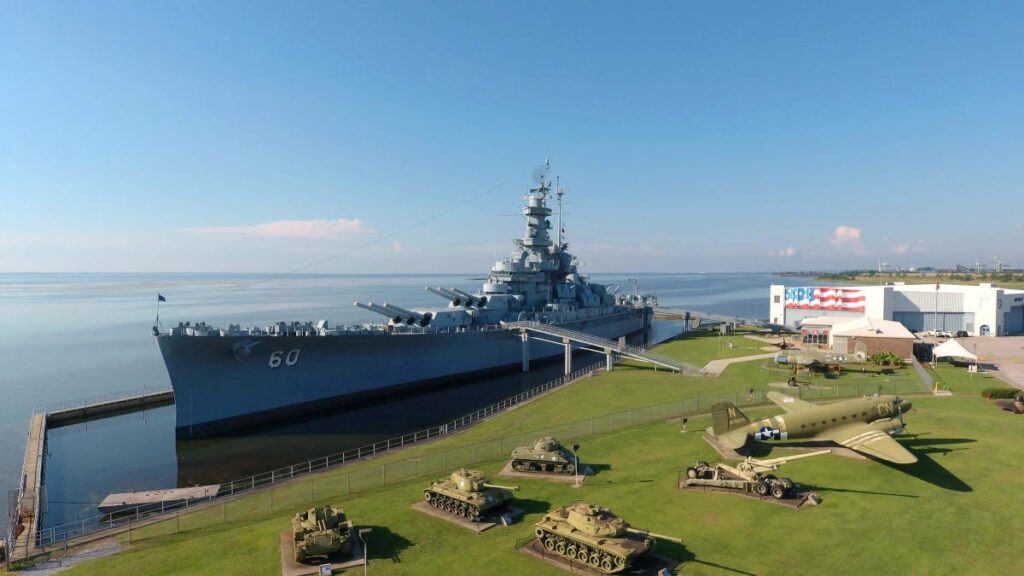
In 1964, the USS Alabama arrived in Mobile Bay to begin her second life as a museum ship at Battleship Memorial Park. Since then, millions of visitors, including school groups, veterans, families, and military enthusiasts, have walked her decks. The ship offers a vivid, immersive glimpse into naval life. Visitors can enter the gun turrets, explore the engine rooms, wander through the mess halls, and stand on the bridge where officers once commanded combat operations. This hands-on experience bridges the gap between past and present, making history come alive in a way no textbook can match.
In addition to the battleship itself, the park features a host of other military exhibits, including the submarine USS Drum, tanks, aircraft, memorials, and a series of outdoor displays dedicated to honoring American service members from various eras. Together, these elements create a powerful tribute to those who fought and sacrificed for freedom.

The Alabama also continues to inspire new generations. Her imposing silhouette has appeared in films, documentaries, and photographs around the world. For many people, she represents not only the wartime legacy of the United States but also the importance of preserving historical artifacts for future learning. Volunteers, veterans, and historians continue the ongoing work of restoration, ensuring that the ship remains seaworthy in spirit—even if she no longer sails the oceans.
Today, more than eighty years after her commissioning, the USS Alabama stands as an enduring symbol of American strength, determination, and remembrance. She serves as a reminder of the critical role battleships once played in shaping world history and the sacrifices made by those who served aboard her. Whether admired for her engineering brilliance, celebrated for her heroic wartime record, or visited as a solemn memorial, the Alabama continues to hold a special place in the hearts of many.