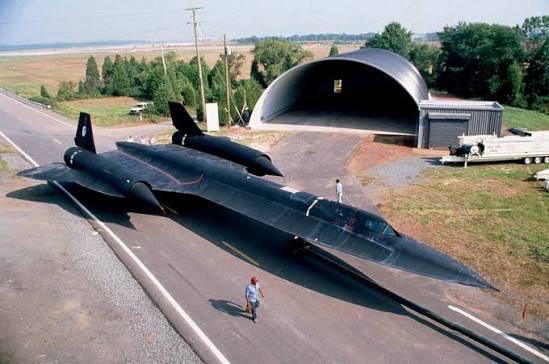
The SR-71 Blackbird remains one of the most legendary aircraft ever built—an icon of speed, stealth, and technological ambition that has never been matched. Designed by Lockheed’s famed Skunk Works division during the height of the Cold War, the aircraft emerged as a symbol of American ingenuity and intelligence-gathering prowess. Even decades after its retirement, the Blackbird continues to inspire awe, curiosity, and admiration for the extraordinary engineering that made it possible.
The story of the SR-71 begins in the late 1950s. At the time, the United States needed a new reconnaissance aircraft capable of replacing the U-2, which had become vulnerable to advanced Soviet air defenses. The downing of Gary Powers’ U-2 in 1960 made it clear that a faster, higher-flying spy plane was required—one that could outrun missiles instead of merely avoiding them. With this challenge, Lockheed’s chief designer Kelly Johnson and his elite Skunk Works team began developing a plane that would push the boundaries of physics.
Their solution was a radical departure from anything that had flown before. The SR-71’s sleek, dart-like shape, titanium skin, and cutting-edge engines allowed it to reach speeds above Mach 3—over 2,200 miles per hour. It could soar at altitudes above 85,000 feet, nearly twice as high as commercial airliners. At those heights, the sky turned a deep indigo, giving pilots a surreal view of the curvature of the Earth. Everything about the Blackbird was revolutionary, and at times seemed almost impossible.
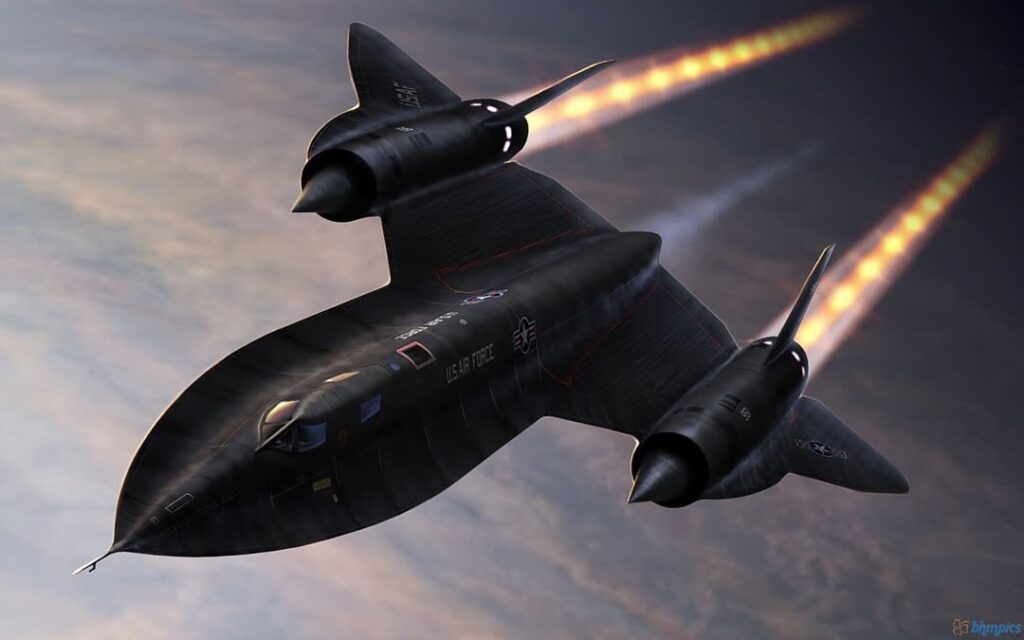
One of the biggest engineering challenges was heat. At Mach 3, friction with the atmosphere generated temperatures high enough to soften traditional metal. Aluminum, the standard aircraft material, would melt at the Blackbird’s operating temperatures. So Lockheed built the SR-71 primarily from titanium, which could withstand extreme heat. This was an enormous challenge because the U.S. did not produce enough titanium, and ironically, much of the titanium used for the SR-71 was quietly purchased from the Soviet Union through shell companies.
The SR-71’s engines were another marvel. The Pratt & Whitney J58 turbo-ramjet engines were capable of transitioning from turbojet mode to near-ramjet behavior at high speeds. Airflow was precisely controlled by movable spike inlets that adjusted position depending on the aircraft’s velocity. This system allowed the engines to breathe efficiently at speeds unreachable by traditional jets. In fact, the aircraft became more fuel-efficient the faster it flew, something unheard of in aviation.
Because of the intense heat, the Blackbird also leaked fuel on the ground. Its panels were intentionally loose while cold, only sealing properly once they expanded in flight. The special fuel—JP-7—could tolerate extremely high temperatures without igniting. Even its ignition system was unique. To start the engines, the SR-71 used triethylborane, a chemical that burst into green flames on contact with air. The aircraft carried a small supply for each engine start and afterburner light.
In addition to speed and altitude, stealth was a crucial part of the design. The SR-71 incorporated radar-absorbing materials, angled surfaces, and a black heat-resistant paint that also reduced radar signature. Its codename “Blackbird” came from this dark exterior. Though not truly invisible to radar, the SR-71 was incredibly difficult to track, and even harder to hit. More than 4,000 missiles were reportedly fired at the aircraft over its career, and not a single one ever struck it. The Blackbird would simply outrun danger.
The crew consisted of two members: the pilot and the reconnaissance systems officer (RSO). Their pressure suits resembled those worn by astronauts, designed to protect them in the near-space environment where the aircraft operated. Flying the SR-71 was as demanding as it was exhilarating. Pilots described the enormous rush of pushing the throttle into afterburner and feeling the aircraft leap forward with unmatched power. At cruising speed, the SR-71 covered a mile every two seconds.
Operational missions took the aircraft all over the world. From Vietnam to the Middle East to the Korean Peninsula, the Blackbird provided critical intelligence during some of the most tense periods of global conflict. It could photograph vast areas with stunning clarity, track missile sites, monitor troop movements, and gather electronic data. Its speed allowed it to dash in and out of hostile airspace before the enemy could react.

One of the most iconic missions occurred during the Yom Kippur War in 1973. The SR-71 conducted several high-speed reconnaissance flights over the conflict zones, providing the U.S. and its allies with invaluable information. Its ability to deliver real-time intelligence helped prevent escalation and informed crucial diplomatic decisions.
Despite its unmatched abilities, the SR-71’s career was not without challenges. It was incredibly expensive to operate, maintain, and support. The fuel alone required a global network of tanker aircraft. The Blackbird also demanded a large team of technicians who were trained specifically to maintain its exotic materials and complex systems. As technology evolved, satellite surveillance became more capable and cost-effective, reducing the need for manned reconnaissance missions. These factors contributed to the aircraft’s retirement in 1998.
Even in retirement, the SR-71 continues to fascinate. Museums display it with pride, and visitors marvel at its futuristic shape. Engineers still study its design for inspiration, and aviation fans celebrate its records, many of which remain unbeaten. The Blackbird still holds the title for the fastest air-breathing manned aircraft in history—a record unlikely to fall anytime soon.
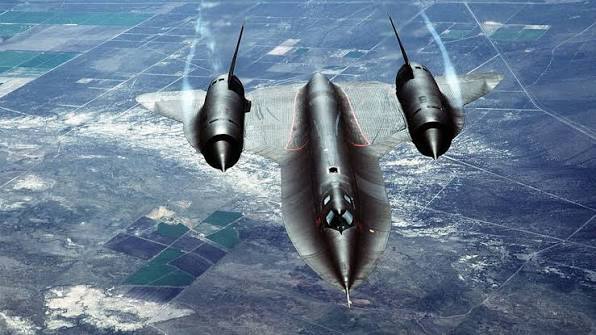
Beyond its technical achievements, the SR-71 represents the daring spirit of innovation. It was born from a period of intense global tension but emerged as a triumph of creativity and problem-solving. The aircraft pushed the limits of what humans could build, enduring conditions that would destroy most machines. It served as a guardian of international stability, quietly gathering information that influenced decisions at the highest levels.
The legacy of the SR-71 Blackbird is not simply about speed or altitude. It is about the boldness to attempt the impossible, the perseverance to solve problems previously unimaginable, and the ability of human ingenuity to outrun the challenges of the era. The Blackbird’s story is a reminder that extraordinary achievements often come when necessity, vision, and innovation collide. Decades later, the SR-71 remains a masterpiece—a symbol of a time when engineers dreamed beyond the horizon and built machines that could touch the edge of space.